
Mert Lawwill: 1940-2026
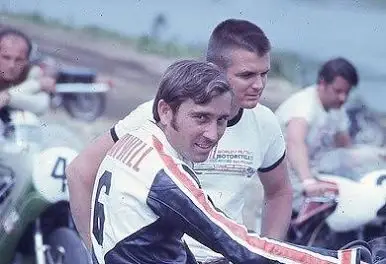
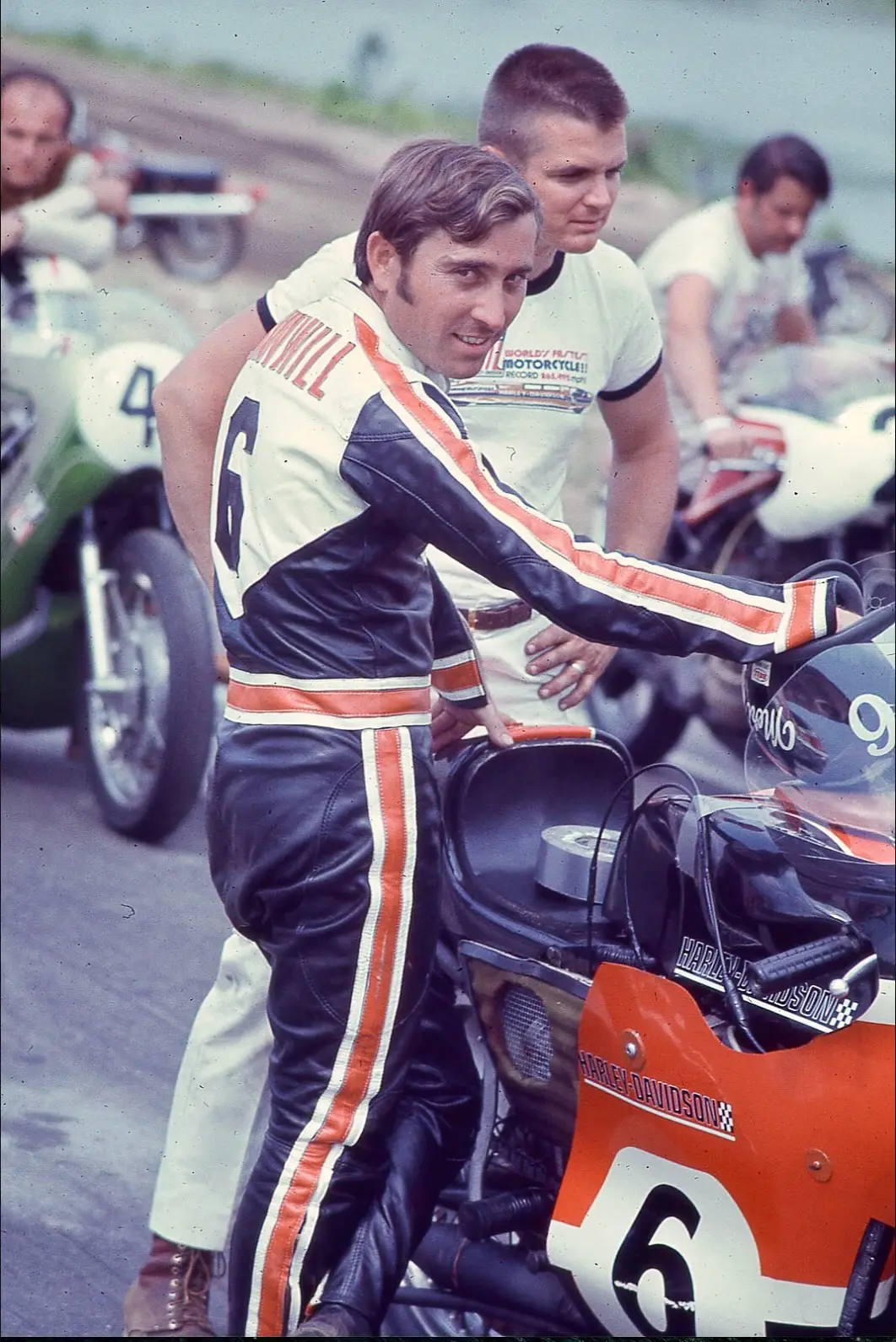
Motorcycle icon, suspension pioneer, innovator, and inductee into five halls of fame, Lawwill has passed away at the age of 85 in his home state of Idaho, surrounded by family and friends.
Born and raised in Boise, Idaho, Lawwill was never one to follow the rules. The son of a house painter and a schoolteacher, both talented artists, and one of seven children, he quickly developed a reputation for finding creative ways to avoid chores—channeling that ingenuity into a life defined by motion, mechanics, and independence.
That spirit found its outlet when his older brother Roy introduced motorcycles into the picture. From that moment on, Mert was hooked.
In Boise, alongside close friends including Al Russell, Dean Huskey, and Al Kozak, Lawwill immersed himself in riding and racing. What began as a tight-knit group of local riders evolved into the foundation of a career that would take him to the pinnacle of American motorcycle racing.
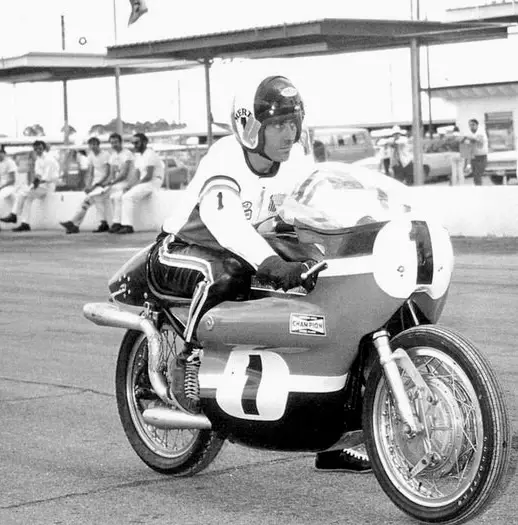
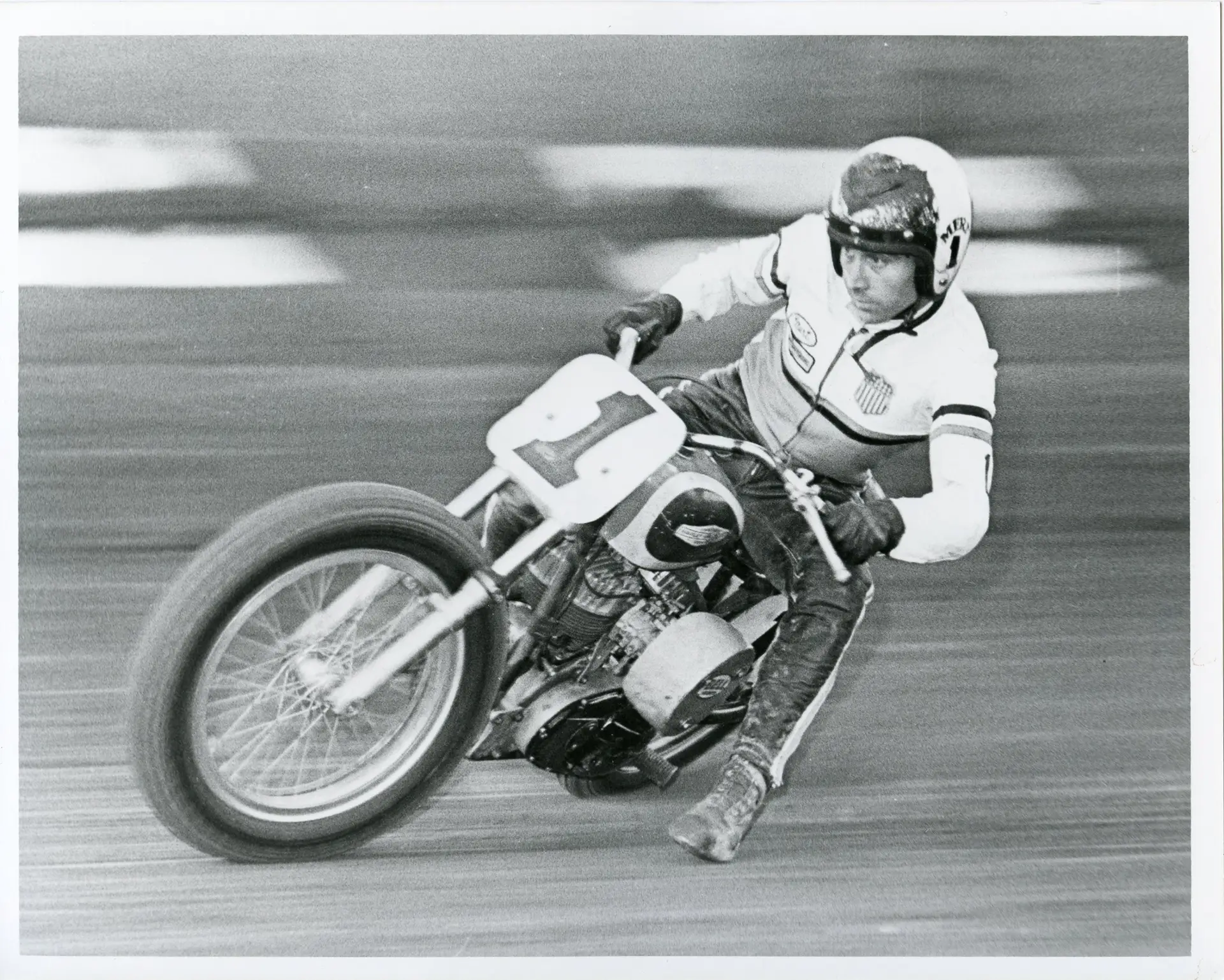
As a longtime factory racer for Harley-Davidson, Lawwill rose through one of the most competitive eras in the sport. Early in his career, the support of Dudley Perkins in San Francisco provided Mert with the opportunity to pursue racing full time, a turning point that helped launch his professional career. He would go on to capture the 1969 AMA Grand National Championship. Known for his smooth style and mechanical intuition, he was not only a champion rider but also a technical pioneer. Lawwill developed his own racing chassis design, which became the benchmark for professional dirt track racing throughout the 1970s and 1980s.
His story reached a broader audience through his appearance in the landmark film “On Any Sunday,” directed by Bruce Brown. Brown’s decision to feature Lawwill introduced him to a global audience—many discovering Mert for the first time through the film—and helped define the culture of motorcycling for generations. Beyond the film, Brown and Lawwill developed a close friendship that endured over the years, a relationship that Mert valued deeply.
Following his racing career, Lawwill brought that same engineering mindset into the bicycle industry, where he became a true pioneer of the sport’s early development. He is credited with producing one of the world’s first production mountain bikes, the PRO CRUISER, in 1977—well ahead of the category’s mainstream emergence.
Lawwill also designed and patented a four-bar suspension system that was adopted by leading brands including Yeti Cycles and Schwinn. In addition, he developed the Lawwill Leader, a groundbreaking leading-link suspension fork that further demonstrated his forward-thinking approach to bicycle design. Throughout the 1990s, elite racers competing on those platforms achieved significant success, further validating Lawwill’s impact on modern mountain bike technology.
Yet among all his accomplishments, the work that meant the most to Mert was deeply personal.
Motivated by his close friend and fellow dirt track competitor Chris Draayer, who lost his arm in a racing accident but was determined to ride again, Lawwill set out to find a solution. The result was a prosthetic innovation known as “Mert’s Hands”—a device that allows riders who have lost a hand or arm to maintain a secure connection to the motorcycle while still being able to safely release in the event of a fall.
This work opened the door for countless adaptive athletes to return to riding and represented, in Mert’s eyes, his most meaningful contribution.
His son Joe Lawwill commented, “From an early age, I understood that my father lived a life that was anything but ordinary. As I began to recognize the respect and admiration people had for Mert, the attention that came with it—even being asked for my own autograph as a child—felt surreal. I started calling him ‘Mert’ as a way to navigate that spotlight. As I grew older and pursued my own career in mountain bike racing, he remained my most steadfast supporter, always encouraging and standing behind me. I have always felt a deep sense of gratitude and honor to call someone so impactful my father.”
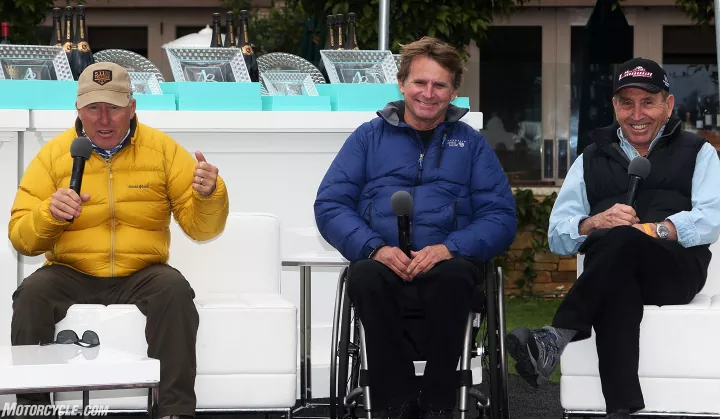
Despite his championships, innovations, and industry influence, those closest to him will remember something less tangible but equally enduring—his independence, creativity, and the unmistakable way he approached life on his own terms. Friends and family remember his unfailing good nature and sense of humor, which remained with him throughout his later years. Lawwill was preceded in death by his wife, June Lawwill. He is survived by his son, Joe; his daughter, Marcella Lawwill; his stepsons, Rick, Mike, and Tim Suchomel; three grandchildren; and extended family, friends, and a global community of riders and fans who were inspired by his life on and off the bike.